

Our Services
Invasive Plant Management
Removing honeysuckle, autumn olive, callery pear, and other aggressive invaders so native plants — and the wildlife that depend on them — can come back.
Invasive plants spread fast, crowd out native species, and offer little value to local wildlife. Left alone, a few honeysuckle shrubs can turn a healthy woodland edge into an impenetrable thicket within a few seasons. We identify what’s actually growing on your property, prioritize the worst offenders, and remove them using methods matched to the terrain and the scale of the infestation.
How a Project Typically Runs
- Site walk & assessment — we walk the property together and identify which species are present and how far they’ve spread.
- Treatment plan — a written plan covering methods, timeline, and cost, matched to your goals and budget.
- Removal — cutting, targeted herbicide application, or mechanical clearing, depending on the species and site.
- Follow-up treatment — return visits to catch resprouts and new seedlings before they take hold again.
Signs You May Need Invasive Control
- Dense shrub thickets that leaf out earlier and hold leaves later than native trees
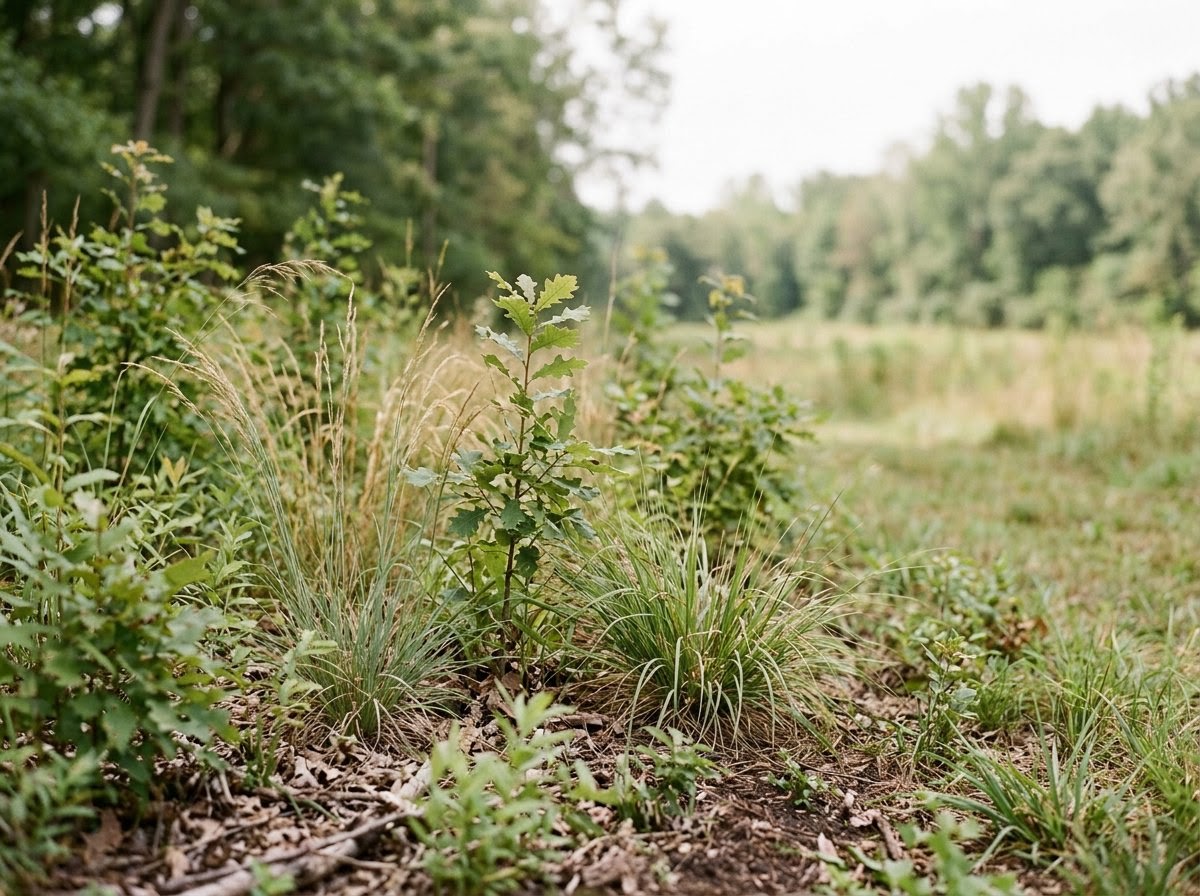
- A woodland understory with little to no native ground cover
- Fence lines or field edges thickening with brush year over year
- Fewer birds, pollinators, or native wildflowers than you remember seeing
Why Follow-Up Matters
Most invasive species produce seed banks that stay viable in the soil for years. A single treatment clears what’s visible today, but resprouts and new seedlings will keep appearing for one to three growing seasons. We build follow-up visits into every plan so the initial work actually holds — rather than reverting within a year or two.
Have invasive plants taking over part of your property?
